Singer Manual Sewing Machine: A Comprehensive Guide
Singer sewing machines, a household name since the 1850s, boast over 434 documented models, offering diverse options from heavy-duty to portable machines for all skill levels.
Historical Overview of Singer Sewing Machines
Singer’s journey began in 1851 with Isaac Singer’s pivotal patent, building upon earlier designs by Lerow and Blodgett. He ingeniously improved upon their circular shuttle with a straight-path alternative and replaced the curved needle with a vertically moving, straight one.
This innovation launched the Singer brand into prominence, quickly becoming synonymous with quality sewing machines. From its inception, Singer has consistently pioneered advancements, including the introduction of the world’s first zigzag stitch.
Over the decades, the company navigated changes in ownership, notably in the 1980s, yet continued to expand its catalog to encompass over 434 distinct models, catering to both domestic and industrial needs.
The 1851 Patent and Early Innovations
Isaac Singer’s 1851 patent marked a turning point in sewing technology. Recognizing flaws in existing machines, like those by Lerow and Blodgett, he focused on streamlining the shuttle mechanism. His design replaced the cumbersome circular motion with a simpler, straight-line path, significantly improving efficiency.
Crucially, Singer envisioned and implemented a vertically moving, straight needle, a departure from the curved horizontal needles of the time. This innovation, coupled with Phelps’ approval, led to the creation of his first commercial sewing machine model.
This initial patent laid the foundation for Singer’s future success and established the core principles of their early machines.
Singer’s Impact on the Garment Industry
Singer sewing machines revolutionized garment production, transitioning it from a laborious, hand-crafted process to a more efficient, mechanized one. Prior to Singer’s innovations, clothing was largely made by skilled seamstresses or in small workshops, limiting output and increasing costs.
The introduction of a reliable, commercially viable sewing machine dramatically increased the speed and scale of clothing manufacturing. This fueled the growth of the ready-to-wear industry, making fashionable clothing more accessible to a wider population.
Singer essentially democratized fashion and laid the groundwork for modern mass production techniques within the garment sector.
Types of Singer Manual Sewing Machines
Singer manufactured a vast array of manual sewing machines, broadly categorized into domestic and industrial models. Domestic machines, designed for home use, prioritized versatility and ease of operation, handling everyday sewing tasks like clothing alterations and crafting.
Industrial manual machines, conversely, were built for heavy-duty, high-volume production in factories and workshops. These robust machines featured enhanced durability and specialized features for specific garment construction processes.
Within these categories lie numerous variations, including highly collectible vintage models like the Featherweight and Black Family series, each possessing unique characteristics and appeal.
Domestic Manual Machines
Singer’s domestic manual machines were engineered for household use, focusing on adaptability for various sewing projects. These machines excelled at garment construction, alterations, and crafting, becoming staples in homes worldwide.
They typically featured a handwheel-driven mechanism, allowing users to control stitching speed and precision. Many models offered basic stitch options, like straight and zigzag stitches, catering to common sewing needs.
Their portability and relatively simple operation made them accessible to a wide range of users, fostering a culture of home sewing and creative expression. These machines remain popular for their reliability and charm.
Industrial Manual Machines
Singer also produced robust manual machines designed for demanding industrial applications, particularly within the burgeoning garment industry. These machines prioritized durability and consistent performance for high-volume sewing tasks.
Unlike their domestic counterparts, industrial models often featured heavier construction, larger flywheels for momentum, and specialized features like walking feet for handling multiple fabric layers. They were built to withstand continuous use in factory settings.
These machines played a crucial role in mass production, enabling faster and more efficient clothing manufacturing. Their reliability and power made them essential tools for businesses.

Vintage Singer Manual Machines: Identifying Key Models
Singer’s extensive history resulted in a vast array of vintage manual machines, each with unique characteristics. Identifying these models requires attention to detail, as over 434 documented designs exist.
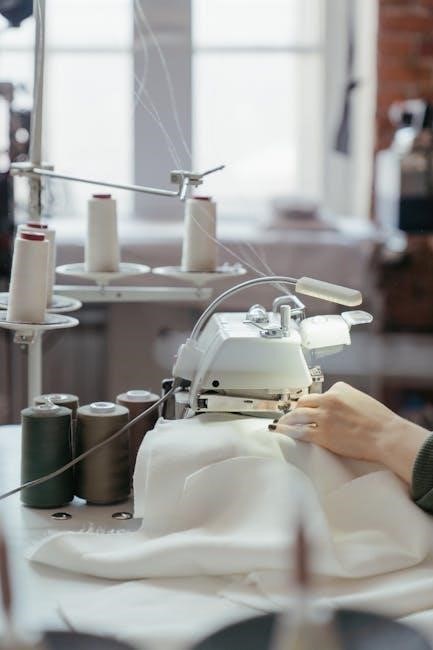
Key identifiers include the serial number, often found on the machine’s body, which can help determine the year of manufacture. Model numbers, typically displayed prominently, further pinpoint the specific design.
Distinct features like the presence of specific decals, treadle styles, and unique attachments also aid in identification. Popular lines, such as the Featherweight and Black Family models, are particularly sought after by collectors.
Featherweight Models: A Collector’s Favorite
Singer Featherweight models, particularly the 221 and 222K, are highly prized by collectors and sewing enthusiasts alike. Their lightweight and portable design, combined with robust construction, made them incredibly popular during the mid-20th century.
These machines are renowned for their smooth operation and ability to handle a wide range of fabrics. The 221, produced in the US, and the 222K, manufactured in Scotland, exhibit slight variations but share the same core functionality.
Their enduring appeal stems from their reliability, ease of maintenance, and the sheer joy of using a beautifully engineered vintage machine.
Black Family Models: Durability and Reliability
Singer’s “Black Family” sewing machines, encompassing models like the 15, 66, and 99, earned a reputation for exceptional durability and unwavering reliability. These robust machines, easily identified by their black enamel finish, were built to withstand decades of heavy use.
They feature a sturdy, cast-iron construction and a powerful motor, capable of handling thick fabrics and demanding sewing tasks. The 66, in particular, is celebrated for its ability to sew through multiple layers of denim with ease.
Their simple design and readily available parts contribute to their longevity and continued popularity among sewing enthusiasts.
Key Components of a Singer Manual Machine
Singer manual machines, despite their simplicity, comprise several crucial components working in harmony. The handwheel initiates the sewing process, driven by the operator’s hand. A precise needle and bobbin system create the stitch, requiring careful threading and bobbin winding.
Tension control mechanisms are vital for balanced stitch formation, adjustable based on fabric type. The presser foot, with its various attachments, secures fabric during sewing.
These elements, combined with a robust frame and intricate gearing, deliver the reliable performance Singer machines are known for.
The Handwheel and its Function
The Singer manual machine’s handwheel is the primary driver of the sewing mechanism. Rotating it clockwise engages the internal gears, causing the needle to descend and ascend, forming stitches. The speed of stitching directly correlates to the handwheel’s rotation rate – faster turns yield quicker sewing.
It’s not merely a rotational element; the handwheel also allows for precise control.
Experienced users can manipulate it to navigate curves, reinforce backstitches, and even manually position the needle. Mastering handwheel control is fundamental to achieving quality results with a manual Singer.
Needle and Bobbin System Explained
The Singer manual machine utilizes a reciprocating needle and an oscillating bobbin to create the interlocking stitches. The needle, driven by the handwheel, pierces the fabric, forming a loop. Simultaneously, the bobbin, housed beneath the fabric plate, rotates, catching this loop and intertwining the thread.
This “lockstitch” is the foundation of secure seams.
Proper bobbin winding and insertion are crucial; an incorrectly installed bobbin will result in tangled threads or skipped stitches. Understanding this interplay between needle and bobbin is key to successful manual sewing with a Singer machine.
Tension Control Mechanisms
Singer manual machines feature tension discs that regulate the thread’s pull, ensuring balanced stitch formation. Incorrect tension leads to looping, puckering, or weak seams. Adjusting the tension knob alters the pressure on the thread as it passes through these discs.
Upper tension controls the thread from the spool, while bobbin tension affects the lower thread.
Finding the optimal setting requires experimentation, varying based on fabric weight and thread type. Properly adjusted tension guarantees consistent, professional-looking stitches on your Singer manual sewing machine.
Presser Foot and its Variations
The Singer manual machine’s presser foot secures fabric during stitching, applying even pressure for consistent feed. Standard feet handle everyday sewing, but numerous variations expand capabilities.
Zigzag feet accommodate zigzag stitches, while buttonhole feet simplify buttonhole creation. Narrow zigzag feet are ideal for appliqué, and rolled hem feet create delicate edges.
These interchangeable feet allow for specialized techniques, enhancing versatility. Understanding each foot’s function unlocks the full potential of your Singer machine, enabling diverse sewing projects with precision and ease.
Setting Up Your Singer Manual Machine
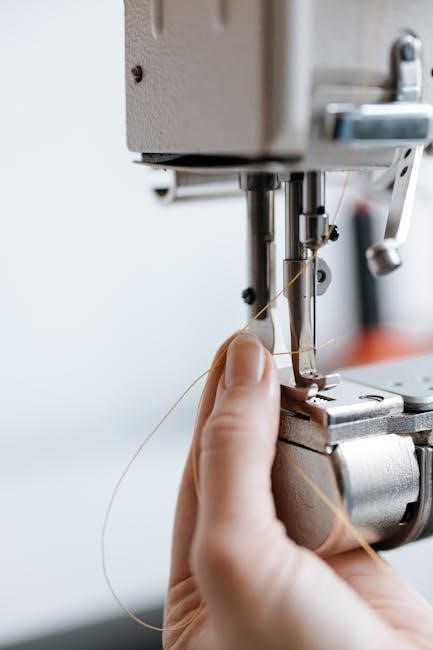
Proper setup is crucial for optimal Singer manual machine performance. Begin by ensuring a stable, well-lit workspace. Correct threading is paramount; follow your machine’s manual meticulously, guiding the thread through each tension disc and guide.
Next, wind the bobbin evenly and insert it correctly into the bobbin case, ensuring smooth rotation. Adjust tension according to your fabric type – lighter fabrics require looser tension, heavier fabrics tighter.
Finally, select the appropriate needle and presser foot for your project, and you’re ready to begin sewing!
Threading the Machine Correctly
Threading a Singer manual machine requires precision. Start by raising the presser foot, which releases thread tension. Guide the thread from the spool pin, through the first tension disc, and around the take-up lever – ensuring it’s fully seated.
Continue threading through subsequent guides, following the path illustrated in your machine’s manual. Proper threading ensures even stitch formation and prevents skipped stitches.
Finally, thread the needle from front to back. Incorrect threading is a common cause of sewing issues, so double-check each step for accuracy before beginning your project.
Winding and Inserting the Bobbin
Winding the bobbin correctly is crucial for smooth sewing. Place the spool on the pin and guide the thread through the tension disc, then onto the bobbin. Engage the bobbin winder and allow it to fill evenly, disengaging it when full.
Next, insert the bobbin into the bobbin case, ensuring it rotates freely and the thread unwinds in the correct direction, as indicated in your manual.
Finally, guide the thread through the tension spring and out of the bobbin case, ready for threading the machine. A properly wound and inserted bobbin prevents thread nests.
Adjusting Tension for Different Fabrics
Proper tension is vital for balanced stitches. Incorrect tension leads to looping or puckering. Lighter fabrics generally require lower tension, while heavier fabrics need higher tension. Begin with the default settings recommended in your machine’s manual.
Test sew on a scrap of the fabric you intend to use. If the top thread pulls the fabric, decrease upper tension. If the bobbin thread pulls, increase upper tension.
Small adjustments are key; observe the stitch formation closely after each change until a balanced stitch is achieved.
Basic Sewing Techniques with a Manual Singer
Mastering fundamental techniques unlocks your Singer’s potential. Begin with straight stitching, guiding the fabric smoothly and consistently under the presser foot. Maintain a steady rhythm while turning the handwheel.
For zigzag stitching, adjust the stitch width and length according to your project needs – it’s ideal for finishing raw edges and creating decorative elements.
Practice seam finishes like a simple overcast stitch or a more refined serged edge to prevent fraying and enhance durability. Consistent practice builds skill and confidence.
Straight Stitching Fundamentals
Achieving a perfect straight stitch with your manual Singer requires practice and attention to detail. Begin by threading the machine correctly and selecting the appropriate needle for your fabric weight.
Guide the fabric gently under the presser foot, maintaining a consistent speed while turning the handwheel. Avoid pulling or pushing the fabric; let the machine feed it through.
Focus on keeping a consistent seam allowance, using the markings on the needle plate as a guide. A steady rhythm and relaxed grip are key to achieving even, professional-looking stitches.
Zigzag Stitching Applications
The zigzag stitch on a Singer manual machine unlocks a world of creative possibilities beyond basic seams. It’s ideal for finishing raw edges, preventing fabric fraying and adding decorative flair. Adjusting the stitch width and length allows for varied effects.
Use a narrow zigzag for applying elastic or lace, and a wider zigzag for reinforcing buttonholes or creating decorative embellishments. This versatile stitch is also excellent for sewing stretch fabrics, providing the necessary give and preventing puckering.
Experiment with different settings to discover unique textures and designs!
Seam Finishes and Techniques
Achieving professional-looking results with a Singer manual machine relies heavily on proper seam finishes. Beyond a simple straight stitch, consider techniques to prevent fraying and add durability. A zigzag stitch along the raw edge is a quick and effective solution.
For a more refined finish, explore techniques like a serged edge (if your machine has the capability) or a turned-and-stitched seam. Pressing seams open or to one side contributes to a cleaner appearance.
Reinforcing stress points, like corners and curves, with backstitching ensures longevity.
Maintenance and Troubleshooting
Regular upkeep is crucial for a Singer manual machine’s longevity. Consistent cleaning removes lint and debris that can impede performance. Oiling key components, following the manufacturer’s guidelines, ensures smooth operation.
Common issues include thread bunching, often caused by improper threading or tension. A jammed bobbin can also halt progress; carefully remove the obstruction. If the needle breaks frequently, verify it’s the correct type and size for the fabric.
Addressing these promptly prevents more significant repairs and keeps your machine sewing reliably.
Regular Cleaning and Oiling
Maintaining a Singer manual machine requires consistent cleaning to remove lint, dust, and fabric fibers. These accumulate and hinder smooth operation, causing jams and tension issues. Use a soft brush and consider a lint remover for hard-to-reach areas.
Oiling is equally vital. Apply sewing machine oil to designated points – consult your manual for specifics – to reduce friction and ensure effortless movement of parts. Avoid over-oiling, as excess attracts more debris.
Regular attention extends the machine’s lifespan and preserves its performance.
Common Problems and Solutions
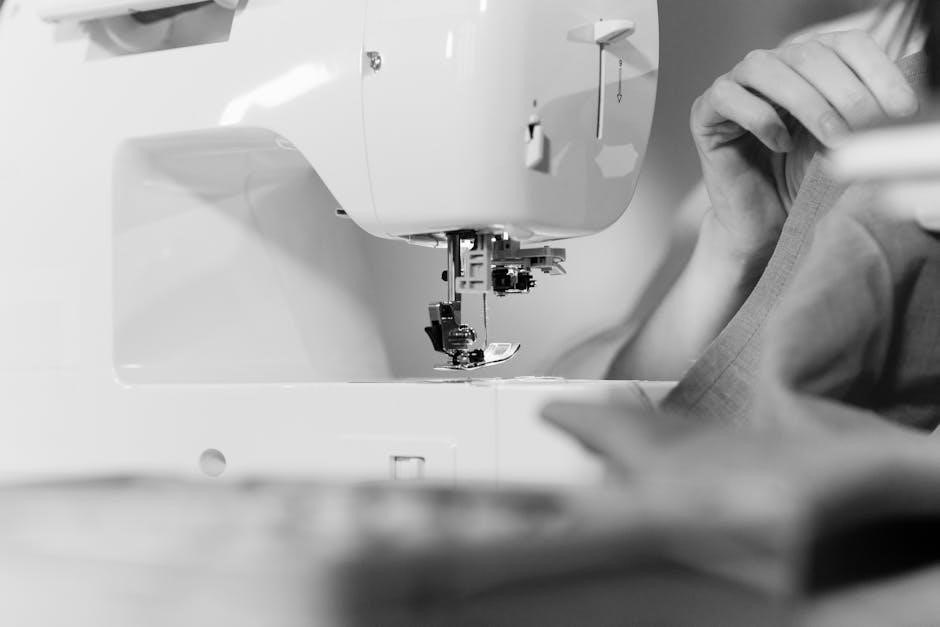
Singer manual machines, while durable, can encounter issues. Thread bunching often signals incorrect threading or tension adjustments – re-thread carefully and experiment with tension settings. Needle breakage frequently stems from using the wrong needle type for the fabric or a dull needle; replace it promptly.
If the machine jams, stop immediately, remove the fabric, and clear any lint or tangled threads. Stiff movement indicates a need for cleaning and oiling. Consult your manual for detailed troubleshooting steps specific to your model.
Finding Replacement Parts
Singer maintains a robust support system for its machines, including access to replacement parts. The official Singer website is a primary source, offering parts diagrams and direct purchasing options; However, due to the age of many manual machines, sourcing parts can sometimes require exploring alternative avenues.
Online marketplaces like eBay and specialized sewing machine parts retailers often carry vintage components. Local sewing machine repair shops can also be invaluable resources, potentially having used parts or knowing where to find them. Always verify compatibility with your specific model number before purchasing.
Resources for Singer Manual Machine Owners
Singer provides extensive resources for owners, starting with official manuals and documentation available on their website. These cover warranty information, terms & conditions, and helpful machine updates. Stitch guides are also accessible, enhancing your sewing experience.
Beyond the official site, vibrant online forums and communities dedicated to Singer machines offer peer-to-peer support, troubleshooting advice, and a wealth of knowledge. For complex repairs, locating qualified repair services and experienced technicians is crucial. These professionals can restore and maintain your vintage machine, ensuring its longevity.
Official Singer Manuals and Documentation
Singer prioritizes owner support by providing comprehensive official manuals and documentation. These resources are readily accessible through the Singer website, offering detailed instructions for various machine models. You’ll find crucial information regarding warranty details, clearly outlined terms and conditions, and essential machine updates to optimize performance.
Furthermore, Singer offers helpful stitch guides designed to expand your sewing capabilities. Accessing these documents ensures proper machine operation, maintenance, and troubleshooting, empowering owners to fully utilize their Singer manual sewing machine and enjoy a seamless sewing experience.
Online Forums and Communities
Singer manual sewing machine enthusiasts benefit greatly from vibrant online forums and communities. These platforms serve as invaluable hubs for sharing knowledge, troubleshooting issues, and connecting with fellow sewing aficionados. Members readily exchange tips, advice, and experiences related to machine maintenance, repair, and creative projects.
These digital spaces often feature dedicated threads for specific Singer models, facilitating targeted assistance. Whether you’re a beginner or an experienced seamstress, these communities offer a supportive environment to learn, grow, and celebrate the enduring legacy of Singer sewing machines.
Repair Services and Technicians
Singer manual sewing machines, while remarkably durable, occasionally require professional attention. Locating qualified repair services and experienced technicians is crucial for maintaining these vintage machines. Specialized repair shops often possess the expertise to diagnose and address complex mechanical issues, ensuring optimal performance.
When seeking assistance, prioritize technicians familiar with older Singer models. They understand the nuances of these machines and can source authentic replacement parts. Online directories and local sewing machine retailers can help identify reputable repair services in your area, preserving the functionality of your treasured Singer.
The Legacy of Singer: Continued Innovation
Singer’s enduring legacy extends far beyond its iconic manual machines. The brand consistently demonstrates a commitment to innovation, evolving alongside the changing needs of sewers. While honoring its historical roots, Singer currently offers a diverse product line, encompassing computerized and heavy-duty models alongside its classic designs.
This dedication to progress ensures Singer remains a leader in the sewing industry. They provide resources like stitch guides and machine updates, supporting both new and seasoned users. Singer’s contribution to sewing education further solidifies its position as a cornerstone of the craft, inspiring creativity for generations.
Singer’s Current Product Line
Singer today presents a broad spectrum of sewing machines, extending well beyond its famed manual models. The current lineup includes robust, heavy-duty machines like the 4452, designed for frequent and demanding use. Simultaneously, Singer caters to beginners with user-friendly, portable options, fostering confidence in new sewers.
Beyond complete machines, Singer offers accessory bundles, specialized presser feet, and essential sewing notions. Regularly updated “Deals” sections provide access to discounted items, including refurbished machines. Support resources, encompassing manuals, warranty information, and expert assistance, ensure a positive user experience.
The Future of Manual Sewing Machines
Despite the prevalence of computerized sewing machines, manual Singer models retain a dedicated following, fueled by their durability, simplicity, and collector appeal. While large-scale innovation may focus on digital features, the core mechanics of manual machines—the handwheel, needle, and bobbin system—remain fundamentally sound.
The future likely holds a continued appreciation for vintage machines alongside limited-edition, modernized manual options. Singer’s commitment to sewing education ensures continued interest, and a resurgence in mindful making may further elevate the value of these timeless tools. Repair services and readily available parts will be crucial for longevity.
Singer’s Contribution to Sewing Education
Singer has historically played a pivotal role in democratizing sewing, making it accessible to a wider audience through readily available machines and instructional materials. This commitment extends to the present day, with Singer offering comprehensive resources like manuals, stitch guides, and online support for their machines.
By providing tools for both beginners and experienced sewists, Singer fosters creativity and skill development. Their current product line, coupled with accessible learning materials, empowers individuals to design garments, upcycle clothing, and pursue home décor projects. This dedication to education solidifies Singer’s legacy beyond manufacturing.