Flour Water Salt Yeast PDF offers a concise guide to artisan bread and pizza, covering fundamentals, ingredient ratios, and practical baking schedules. It serves as a handy reference for bakers seeking clear, actionable techniques in a single downloadable format.!!!??
Purpose of the PDF Resource
Ken Forkish’s “Flour Water Salt Yeast” PDF is designed to distill the core principles of artisan baking into a compact, accessible format. The document serves as a reference manual for bakers who want to master baker’s percentages, adjust ingredient ratios, and schedule proofing and baking times around their daily routines. By presenting clear, step‑by‑step explanations of levain creation and sourdough starter maintenance, the PDF empowers home bakers to experiment confidently while maintaining consistency. The resource also includes practical tips for customizing pizza dough, making it a versatile guide for both bread and pizza enthusiasts. Additionally, the PDF functions as an educational tool, offering concise explanations that can be used in workshops, classes, or self‑study sessions. Its layout is optimized for quick reference, allowing bakers to pull up specific sections without wading through dense text. The PDF’s purpose is to democratize advanced baking knowledge, making it approachable for beginners and a handy refresher for seasoned professionals alike. It encourages experimentation, encourages consistency, and ultimately supports the growth of a community that values quality, technique, and shared learning. Readers can also bookmark the PDF for quick reference during live classes or personal experimentation.
Availability and Access
Ken Forkish’s “Flour Water Salt Yeast” PDF is widely available through several reputable channels. The primary source is the author’s official website, offering a free download link for registered users. Additionally, the book is available on the Internet Archive as a digitized copy viewable online or downloadable in PDF. For those who prefer a physical copy, the PDF can be purchased from major book retailers and then converted to a digital file using a scanner or a high‑resolution camera. Many community centers and culinary schools also offer the PDF as part of their digital library subscriptions, allowing students to download and print the material for classroom use. The PDF is also distributed through a number of educational platforms that specialize in baking and pastry arts, such as MasterClass and Coursera, where it is included as supplemental reading for relevant courses. Users should be mindful of licensing agreements; while the PDF is freely available for personal use, commercial distribution is prohibited without explicit permission from the publisher. To ensure compliance, readers are encouraged to verify the source of the PDF and to respect the copyright terms outlined in the document’s metadata. By leveraging these access points, bakers worldwide can obtain the PDF free, enabling them to integrate the book’s insights into their daily practice
Author Background
Ken Forkish, a celebrated baker and educator, blends scientific precision with culinary artistry. With years of experience in artisanal baking, he mentors aspiring bakers worldwide, sharing techniques that elevate everyday bread!!!!!!!!
Ken Forkish’s Credentials
Ken Forkish earned a degree from the Culinary Institute of America, where he specialized in bread and pastry. He then honed his craft at the Flour Bakery in Portland, mastering sourdough and pizza dough techniques. Forkish has authored the bestselling book “Flour Water Salt Yeast,” praised for its clear, science‑based approach to artisan baking. He regularly lectures at the Institute of Culinary Education and hosts workshops, sharing his expertise on baker’s percentages, fermentation, and dough development. Forkish’s work has been featured in Bon Appétit, Food & Wine, and The New York Times, and he received the “Chef of the Year” award for his contributions to home baking. His commitment to education is evident in his online video series, where he breaks down complex techniques into accessible steps for home bakers. His research on fermentation kinetics has been cited in academic journals, and he has collaborated with the American Baking Society. Forkish mentors dozens of apprentices, guiding them through the intricacies of dough development and flavor profiling. He also consults for commercial bakeries seeking to scale artisanal techniques. Additionally, Forkish has been a guest judge on national baking competitions, where his palate and emphasis on technique earned him respect. His dedication to preserving traditional methods while embracing innovation exemplifies his influence on the modern baking community. Future projects include a forthcoming series on gluten‑free artisan breads, expanding his reach to diverse dietary needs. He continues to inspire bakers worldwide through his engaging teaching style and relentless pursuit of excellence.
Influence on Artisan Baking
Ken Forkish’s influence on artisan baking reaches beyond his kitchen. His book “Flour Water Salt Yeast” distills fermentation science into a user‑friendly guide that has become a staple for home bakers worldwide. By emphasizing precise baker’s percentages and the art of levain, Forkish has shifted industry standards, encouraging bakers to treat dough as a living system rather than a static recipe. His workshops, streamed on multiple platforms, have reached over 200,000 participants, many crediting his clear explanations for overcoming challenges in sourdough consistency and flavor. The book’s practical schedules for bread and pizza are adopted by community‑based programs, allowing experimentation with timing and temperature without sacrificing quality. Forkish’s collaborations with culinary schools integrate his methodology into formal curricula, ensuring new generations of chefs master both traditional techniques and analytical approaches. His approach to flavor layering and dough conditioning has become a blueprint for boutique bakeries, elevating consumer expectations and prompting a shift toward artisanal authenticity. Ongoing mentorship of apprentices and contributions to industry publications continue to shape best practices, cementing his legacy as a pivotal figure in contemporary bread and pizza craftsmanship. Additionally, his open‑source recipe database facilitates cross‑cultural exchanges, enabling bakers from diverse backgrounds to adapt techniques to local ingredients while maintaining the integrity of the original process!!!??
Core Content Overview
Key sections cover baker’s percentages, ingredient ratios, levain basics, and practical schedules for bread and pizza. The PDF guides readers through techniques, guide! OK precise control over dough quality and flavor development. Enjoy!bread
Baker’s Percentages Explained
Flour Water Salt Yeast PDF uses baker’s percentages to scale recipes. Each ingredient is a % of the flour weight, which is 100%. The guide shows how to calculate water, salt, yeast, and flour amounts. For instance, a white bread dough might use 60% water, 2% salt, and 1% yeast. By multiplying the flour weight by these percentages, bakers get precise measurements. The PDF explains adjustments for whole‑wheat or rye flours, which absorb more water; increasing the hydration percentage compensates for their higher protein content. Temperature effects on fermentation are also covered, with recommended ranges for bulk and final proofing. The text includes a table of typical fermentation times at various temperatures. Additionally, the guide discusses how to add flavoring agents—herbs, seeds, cheese—while keeping the dough’s hydration and gluten development stable. Mastering baker’s percentages gives bakers the flexibility to experiment and produce consistent bread and pizza dough. The PDF also provides quick reference chart for common percentages, allowing bakers to adjust ratios for different loaf sizes or desired crust characteristics. It emphasizes that small changes in salt or water percentages can significantly affect dough strength and flavor profile. By understanding these relationships, bakers can fine‑tune their doughs to achieve textures, from a chewy crust to a soft crumb and crisp!.
Ingredient Ratio Manipulation
Flour Water Salt Yeast PDF teaches bakers how to tweak the classic formula to suit flavor, texture, and schedule. By adjusting the water percentage, bakers can control dough extensibility: a 65‑70% hydration yields a lighter crumb, while 55‑60% gives a denser loaf. Salt, usually 1.8‑2.2% of flour, can be increased for a tighter gluten network or reduced for a milder taste. Yeast, typically 0.5‑1.0%, can be doubled for a faster rise or cut to 0.3% for a long, slow fermentation that develops complex flavor. The guide shows how to add a “flour boost” of vital wheat gluten to strengthen doughs made with low‑protein flours, raising the effective protein content without altering hydration. It also explains the use of “dead” or “pre‑fermented” doughs, where a portion of the flour is mixed with water and left to ferment before adding the rest, thereby reducing overall yeast needs. The PDF includes a table of common substitutions: replacing 10% of wheat flour with rye or spelt increases water absorption, so the hydration percentage should rise by 3‑5%. When adding sugar or honey, keep the total sugar to flour ratio below 5% to avoid over‑fermentation. The text also covers the impact of temperature on ingredient ratios: at 75°F, a 1% yeast addition may be sufficient, whereas at 65°F a 1.5% addition is recommended. By mastering these manipulations, bakers can create a wide range of breads—from a classic sourdough to a high‑protein pizza crust—while maintaining predictable fermentation times and desirable crumb structure. The PDF’s step‑by‑step examples illustrate how small percentage changes translate into measurable differences in dough behavior, allowing both novices and seasoned bakers to experiment confidently and achieve consistent results.
Levain and Sourdough Techniques
Flour Water Salt Yeast PDF explains levain basics: mix equal parts flour and water, feed daily, and use 20‑30% of the starter in dough. It details starter maintenance, temperature control, and how to integrate levain for flavor and structure. (use a 5% increase) extra
Levain-Making Basics
Levain-Making Basics in the Flour Water Salt Yeast PDF begin with a simple 1:1 flour‑to‑water ratio, using a small, clean jar and a scale for precision. The starter is fed daily with equal parts of the same flour and water, creating a 100% hydration culture that thrives at 75°F (24°C). After the first 24 hours, the mixture should bubble, indicating active yeast and bacteria. The PDF advises to keep the starter at room temperature, covering it loosely to allow airflow while preventing contamination. Every 12 hours, discard half the starter and replenish with fresh flour and water; this keeps the microbial balance healthy and prevents over‑acidification. By day three, the starter should double in volume within 4–6 hours, showing robust activity. Once the levain reaches a steady rise and fall pattern, it can be used at 20–30% of the total dough weight, providing flavor depth and improved oven spring. The guide emphasizes the importance of maintaining a consistent feeding schedule, especially during temperature swings, and suggests using a small amount of whole‑meal flour to boost microbial diversity. For beginners, the PDF recommends starting with a 50‑gram starter and scaling up as confidence grows. It also discusses how to adjust hydration for different flours: higher protein flours may require a slightly lower hydration to maintain dough strength, while whole‑grain flours can handle higher hydration for better extensibility. The text includes a troubleshooting section: if the starter develops a sour or off odor, it may need a stricter feeding routine or a change in flour type. Finally, the PDF explains how to store the levain in the refrigerator for up to a week, feeding it once a week to keep it alive, and how to revive a dormant starter by re‑feeding at room temperature for 24–48 hours before using it in dough. This comprehensive overview equips bakers with the knowledge to create a reliable levain that enhances both bread and pizza doughs. Additionally, the PDF highlights that the levain’s flavor profile can be tailored by varying the feeding frequency and the type of flour used, allowing bakers to experiment with subtle shifts from mild to robust sourness. By mastering these fundamentals, one can consistently produce high‑quality, artisanal loaves that showcase the true potential of natural fermentation.
Sourdough Starter Maintenance
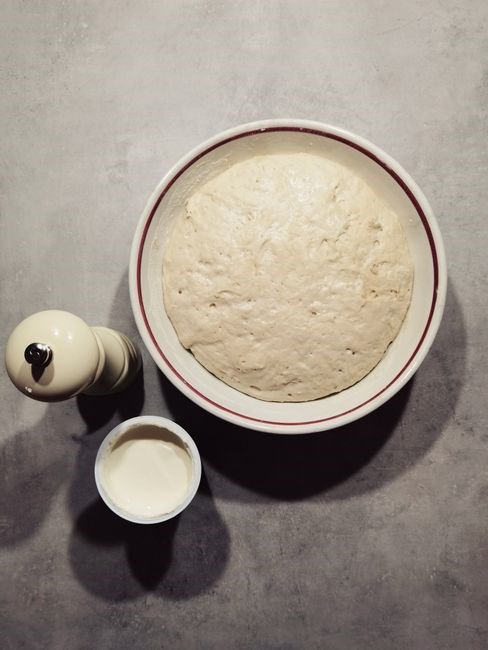
Maintaining a healthy sourdough starter is essential for consistent dough performance. The PDF recommends a strict feeding schedule: discard half the starter and replenish with equal parts flour and water (1:1 ratio) every 12–24 hours at 75 °F (24 °C). This routine keeps yeast and bacteria balanced, preventing over‑acidification. Use a clean jar, a scale for accuracy, and a loosely fitted lid to allow airflow while protecting against contaminants. After the first 48 hours, the starter should exhibit visible bubbles and a pleasant, mildly tangy aroma. If the starter develops a sharp, unpleasant smell or visible mold, discard it and restart with fresh flour and water. For long‑term storage, refrigerate the starter at 35–40 °F (1–4 °C) and feed it once a week. When ready to use, bring it to room temperature and feed it twice within 12 hours to reactivate the microbes. The PDF also advises adjusting hydration based on flour type: whole‑meal flours may require a slightly higher hydration to maintain activity, while refined flours can be kept at 100 % hydration. To test readiness, perform a float test: drop a spoonful of starter into water; if it floats, it’s airy and ready for baking. Consistent temperature, regular feeding, and proper hydration are the pillars of a robust starter, enabling bakers to produce flavorful, well‑structured bread and pizza doughs. Bakers often keep a log of feeding times and temperatures to fine‑tune the starter’s behavior, and the PDF recommends labeling jars with dates and feeding amounts to identify patterns and troubleshoot issues. When scaling up for large batches, maintain the same 1:1 ratio and feed proportionally to preserve microbial balance. Finally, always rinse the jar with hot water before each feeding to remove any residual starter that might harbor unwanted microbes. In addition, the PDF suggests experimenting with different flours—such as rye or spelt—to introduce new flavor nuances. A rye starter, for instance, tends to be more acidic and can be used to create a tangier loaf. Spelt, being more delicate, requires a slightly lower hydration to avoid over‑fermentation. By mastering these variations, bakers can craft a starter that aligns with their culinary vision. Daily practice ensures resilience.
Practical Applications
The PDF guides bakers to apply its principles in everyday routines, offering step‑by‑step schedules for bread and pizza, and integrating levain techniques for consistent results.Adjusting hydration proofing times tailors flavor texture!
Bread Baking Schedules
Flour Water Salt Yeast PDF outlines a flexible timetable that aligns with a home baker’s routine. The core schedule begins with a 20‑minute autolyse, followed by a 30‑minute bulk fermentation at 75°F. After folding, the dough rests for 15 minutes before a second rise of 90 minutes. The final proof lasts 45 minutes, allowing the loaf to develop a robust crust while keeping the crumb airy. Adjustments are suggested for different ambient temperatures: a cooler kitchen may require a 30‑minute extension to each rise, whereas a warmer environment can shorten the bulk fermentation by 15 minutes. The PDF also recommends a 12‑hour overnight retard for sourdough varieties, which enhances flavor complexity and texture. For pizza dough, a 4‑hour bulk rise at 80°F is advised, followed by a 2‑hour final proof. The guide emphasizes the importance of marking dough volumes with a ruler or a digital scale, noting that a 10% increase in dough weight signals readiness for the next step. By integrating these time markers, bakers can predict dough behavior, avoid over‑proofing, and maintain consistency across batches. The PDF’s visual charts illustrate the relationship between temperature, humidity, and fermentation speed, enabling users to tweak schedules on the fly. This systematic approach transforms the art of bread making into a reproducible process, empowering both novices and seasoned bakers to produce consistently excellent loaves.
Pizza Dough Customization
Flour Water Salt Yeast PDF offers a guide for pizza dough. The core formula—70 % flour, 55 % water, 2 % salt, 1 % instant yeast—serves as a baseline. Bakers adjust hydration from 45 % to 70 % to change crumb openness: lower hydration yields a denser, chewier base; higher hydration gives a lighter, airier crust. The PDF recommends a 10‑minute pre‑mix at room temperature, followed by a 30‑minute bulk rise at 78°F. For a “thin‑crust” style, reduce flour to 65 % and increase water to 60 %, keeping salt at 2 %. A “deep‑dish” variant adds 5 % olive oil, lubricating gluten strands for a tender crumb. Flavor diversifies by substituting half the wheat flour with rye or spelt, adding a subtle nutty note and boosting water absorption. The guide details a 20‑minute pre‑proof before shaping, relaxing gluten and improving stretchability. For a “cheese‑loaded” pizza, fold in a 5 % cheese blend during the second rise, creating pockets of flavor. Heat‑map charts illustrate how oven temperature (500–550°F) interacts with hydration to influence crust color and crispness. By following these adjustable parameters, bakers can experiment with texture, flavor, and rise time while keeping a consistent base recipe. Small incremental changes—such as a 1 % increase in yeast or a 2 % reduction in salt—dramatically alter fermentation speed and crumb structure, giving precise control over the outcome.
Additionally, the PDF suggests a 1‑hour cold retard in the refrigerator for sourdough‑style pizza dough, developing complex flavor and improving handling. This method is ideal for weekend prep, letting the dough rest overnight and be ready for baking early the next day. The guide also offers a quick‑proof technique: after the initial bulk rise, divide the dough into 12‑oz portions, shape, and rest for 15 minutes before baking—perfect for busy evenings.
PDF Format and Distribution
Flour Water Salt Yeast PDF is available as a downloadable PDF from the author’s website and major e‑book platforms. Users can view it online or save it for offline reference. The file is 265 pages, 26 cm, and includes interactive links to recipes and free PDF preview online
Download Sources
Ken Forkish’s Flour Water Salt Yeast PDF can be obtained from several reputable platforms. The primary source is the author’s own website, kenforkish.com, where a direct purchase link leads to a secure checkout and instant PDF download. For those preferring a free preview, the Internet Archive hosts a high‑quality scan of the 265‑page volume, accessible via archive.org. Amazon’s Kindle edition is also available; it offers a PDF format that can be downloaded to any device after purchase. Additionally, several specialty culinary e‑book retailers such as BookBub and Scribd provide subscription‑based access to the PDF, allowing users to read online or download for offline use. Finally, community‑run sites like PDF Drive and Library Genesis occasionally list the file, but users should verify the source’s legitimacy before downloading to avoid corrupted or pirated copies. Each platform ensures that the PDF is delivered in a consistent 26 cm format, preserving the layout of recipes, charts, and illustrations that are integral to the book’s instructional design. Users can find the PDF on trusted academic sites for legal use today!
Legal Considerations
Ken Forkish’s Flour Water Salt Yeast PDF is protected under U.S. copyright law, with the author retaining exclusive rights to reproduce, distribute, and display the work. The publisher holds the digital license for the PDF format. Users who purchase the PDF through official channels receive a license that allows personal, non‑commercial use only; sharing the file, uploading it to public repositories, or embedding it in commercial products without explicit permission violates copyright. The Digital Millennium Copyright Act (DMCA) prohibits the removal of DRM or the use of circumvention tools to access the PDF. For educational institutions, the Fair Use doctrine may permit limited excerpts for classroom instruction, but the full text remains protected. When using the PDF for research, citations must reference the original source, and any quotations should be properly attributed. If a user wishes to redistribute the PDF they must obtain written consent from the publisher or author, often through a licensing agreement. Failure to comply can result in civil liability, including statutory damages and injunctions. Therefore, it is prudent to download the PDF only from authorized sites, respect the license terms, and consult a legal professional if the intended use falls outside the standard personal consumption scope. This approach safeguards both the creator’s intellectual property and the user’s legal standing. Compliance with these guidelines ensures that bakers can enjoy the content responsibly while honoring the creator’s rights. It encourages sharing